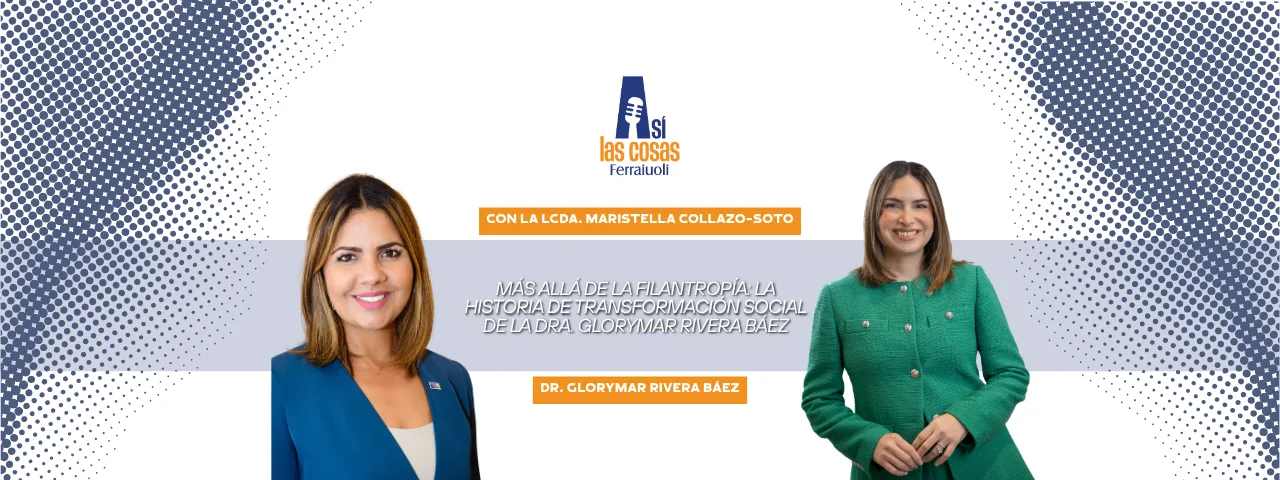
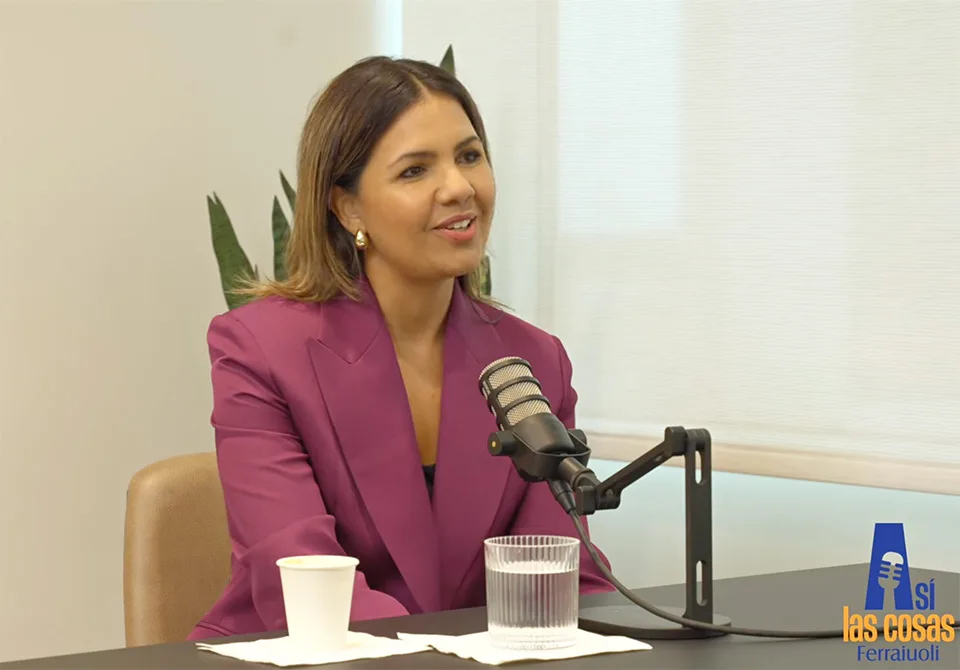
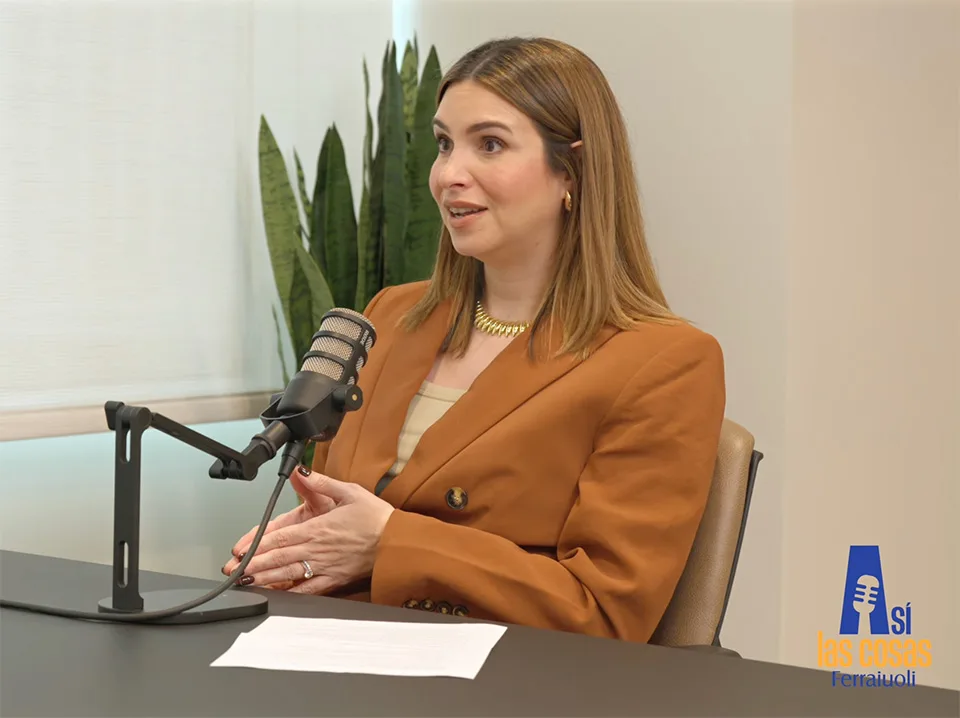
Dr. Glorymar Rivera Báez leads United Way Puerto Rico, the organization most Puerto Ricans still know as Fondos Unidos. She spoke with Maristella Collazo-Soto about the structural problem behind nonprofit fundraising on the island.
Key points:
Puerto Ricans are generous. The system is fragmented. She rejects the idea that islanders do not give. The obstacle is a sector spread too thin across too many organizations chasing the same donors.
She is an industrial-organizational psychologist by training, with a doctorate in the field, and grew up as the daughter of a Methodist pastor whose first assignment came when she was five months old.
Her ask of the private sector: define your impact first. Most companies she visits have no stated social-impact plan, so they give small amounts across many causes, which deepens the fragmentation.
Her framework for the sector: collaboration requires discipline, not good intentions. It means listening, committing time, sharing what works, and accepting that the cause is the protagonist rather than the organization.
Who is Dr. Glorymar Rivera Báez?
Dr. Glorymar Rivera Báez is President and CEO of United Way Puerto Rico. She holds a doctorate in industrial-organizational psychology and has spent more than twenty years working across the private sector, the nonprofit sector, and independent consulting in Puerto Rico, the United States, and Latin America.
Her path into social work started at home. Her father is a Methodist pastor in Puerto Rico whose first pastoral assignment came when she was five months old, so she grew up watching congregations organize themselves to support people in need. That exposure shaped a lasting interest in community service.
She began her bachelor’s degree in psychology intending to practice clinically. Once she encountered industrial-organizational psychology, the range of the specialty won her over, because it let her work across private, nonprofit, faith-based, and community settings. She completed the master’s, then the PhD.
What is United Way Puerto Rico, and is it the same as Fondos Unidos?
Yes. United Way Puerto Rico is the organization long known in Puerto Rico as Fondos Unidos de Puerto Rico. It transitioned to the United Way name in 2019 and remains incorporated under its original legal identity. The organization reaches 60 years on the island next year and belongs to the United Way Worldwide federation
Why does changing career direction deserve credit rather than suspicion?
Rivera Báez set out to become a clinical psychologist and ended up somewhere else, which she treats as evidence of clarity rather than instability. She describes having to manage expectations from professors and mentors who had invested in her clinical training and pictured her as a researcher in that field.
Years later she has run into some of those same people and found no sense of a break in her path. What they see is a career that kept serving social wellbeing from different angles.
Maristella pushes on this point because she hears it constantly on the podcast. She recalls interviewing former Governor Sila María Calderón, whose mother told her that women who work are not happy when she decided to enter the workforce. In every conversation she has had with successful professionals, someone reached a moment of choosing between the expected path and what they believed was right, and the outcome tends to vindicate the choice.
What does United Way Puerto Rico actually do?
The organization identifies resources, primarily through private-sector fundraising, and channels them to nonprofits already delivering direct services to vulnerable populations. It arrived on the island decades ago, when Puerto Rico lacked an organized structure for the social sector, and helped build that structure. The impact remains in the local community.
What did she give up to take the role?
She gave up a consulting practice built under her own name, which she describes as the hardest part of the transition. After Hurricane María in 2017, the bishop of the Methodist Church asked her to lead the church’s nonprofit, Rehaciendo Comunidades con Esperanza, which had no executive director at the time. She left her consulting projects and took it, treating the request as a calling.
The organization held grants totaling close to 30 million dollars for community reconstruction. Under her leadership the work scaled from a handful of municipalities to 34. She stayed about six years, completed the projects, and left with the organization in a stronger position.
Then she returned to consulting from zero, without a safety net on income. Former clients came back quickly, referred her to others, and the work expanded to projects in the Virgin Islands and the United States.
The call about United Way arrived during that stretch. Someone told her an opportunity existed, offered no details, and urged her to at least listen. That afternoon a member of the board of governors called about the presidency. She had grown up seeing the Fondos Unidos campaigns and considered the organization part of Puerto Rico’s civic fabric, so she agreed to enter the process based on its credibility and legacy.
What is the biggest challenge facing nonprofits in Puerto Rico?
Fundraising, and the reason is fragmentation rather than a lack of generosity. Rivera Báez is direct about correcting the assumption. Puerto Ricans give, and they give their time. The difficulty comes from channeling those resources in a structured way when the sector has spread so thin.
The data tells the story. A 2007 study of nonprofits in Puerto Rico counted roughly 6,000 registered organizations. The 2022 study by Estudios Técnicos documented about 13,863. She expects the figure now sits above 15,000, and United Way is preparing to update the study.
Set that against a population of about 3.1 million and a private sector facing its own pressures, and the arithmetic gets difficult. Many organizations end up approaching the same donors, and the effort dissolves. When someone in Puerto Rico wants to help, the first instinct is to incorporate a new nonprofit, which adds another organization to an already crowded field.
What would meaningful collaboration look like?
It would mean organizations working the same geography stopping to identify their points of overlap, then applying for funds together through consortiums instead of separately. Rivera Báez is specific that this differs from the version of collaboration where an organization joins someone else’s effort briefly and then leaves.
The obstacle is cultural and personal. Maristella raises the dynamic she saw during her own time with Girl Scouts, where founders of small nonprofits guard their vision closely. Rivera Báez agrees that an act of letting go has to happen, and soon, because conditions for survival are hard.
Her framing question for the sector: who is the protagonist? If the answer is the cause and the communities rather than the organization or the individual leader, then strategies have to change accordingly. She adds a second requirement, democratizing information, since holding onto a formula for raising resources without sharing it guarantees that some organizations succeed while others fail.
Why does Dr. Rivera Báez say collaboration requires discipline?
Because collaboration without structure stays symbolic. She describes the discipline as committing to listen, dedicating time, identifying points of consensus, and approaching the work with the attitude that you still have things to learn. She notes this applies to corporate team building as much as to nonprofits, and that it requires patience, consistency, and intentionality rather than happening organically.
What should the private sector do differently?
Define the impact you want before you write the check. Rivera Báez has found Puerto Rico’s private sector generous, with more companies developing volunteer initiatives and contributing across areas. What she finds missing is a defined plan for the impact each company wants its contributions to achieve.
Without that definition, giving becomes reactive. A company donates because someone asked, or because a cause seems appealing, or because an organization has a good reputation. The money moves in small amounts across many directions, which reinforces the same fragmentation the sector is trying to solve.
When she visits companies, she asks presidents and directors whether they have defined causes or a social-responsibility plan. Many say no. Some point to education, STEM, or the environment. A few have it fully mapped.
Her pitch to companies now is to let United Way serve as their strategic partner on social impact. The underlying business case is straightforward: companies want their communities to prosper, because that is where their employees and their customers live.
How can a company give more strategically in Puerto Rico?
Start by defining the impact the company wants to achieve, then identify nonprofits aligned with that goal. Dr. Rivera Báez recommends giving with purpose and intention rather than distributing small amounts across many unrelated causes. Strategic giving requires measurement mechanisms and accountability so the company can track where the money lands, what impact it produces, and what adjustments are needed.
What has been her greatest satisfaction in the role?
Completing the strategic plan within a year, when people told her it would take longer. The board’s first assignment when she arrived was to build it, which she describes as receiving a blank canvas backed by the organization’s legacy.
The plan was presented last year to affiliated organizations, government collaborators, and other sectors at an event for 150 people, held at facilities donated by Raúl Bustamante of the Royal Sonesta hotel, a former board member. She points to that gesture as one example among many collaborators invested in the organization’s success.
She adds that she does not linger long in any accomplishment before asking what was learned and what comes next.
What would she do if money were not a consideration?
She would do what she is already doing. Rivera Báez says she cannot conceive of a different way to live than making herself useful and putting her talents at the disposal of others. She attributes what she has to her faith and frames her work as gratitude in practice.
She closes the conversation with an argument for making room to think. Inside accelerated schedules, both the social sector and its private-sector partners need space to rethink how the work gets done. Everyone wants to see their communities well and Puerto Rico well, which justifies pausing to reconsider, and then acting on it.
Watch the Full Episode
The complete conversation between Maristella Collazo-Soto and Dr. Glorymar Rivera Báez covers her path from clinical aspirations to industrial-organizational psychology, the six-year rebuilding work after Hurricane María, United Way Puerto Rico’s 2030 strategic plan, the fragmentation of the island’s nonprofit sector, and what strategic corporate giving requires.
Subscribe to the channel so you do not miss the conversations behind Ferraiuoli’s people, clients, and community.
What cause would you support if you gave with purpose?