When Puerto Rico’s First Woman Governor and Her Daughter Sit Down to Talk About What Really Matters
“Women who work are not happy.”
That’s what Sila María Calderón’s mother told her when she announced she was taking her first job outside the home. Her youngest daughter, her “broche de oro” (crown jewel), was only three years old.
“I want to tell you,” Sila reflects decades later, “that I have been one of the happiest women in Puerto Rico.”
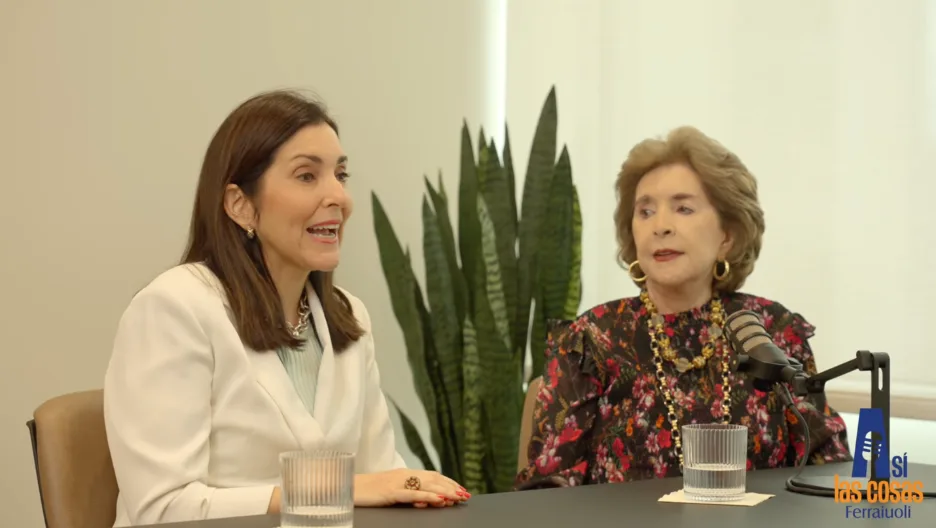
In this extraordinary episode of Así las Cosas, host Maristella Collazo-Soto, Capital Member of Ferraiuoli, sits down with two remarkable Puerto Rican women whose stories are both independent and deeply intertwined: former Governor Sila M. Calderón and her daughter, Counsel of Ferraiuoli, María Elena González Calderón.
This is not simply a conversation about careers. It’s an exploration of what it takes to build a life of impact while raising a family, serving your community, and staying true to yourself. It’s about the choices that define us, the fears we must confront, and the imperative—as Sila puts it—to “be happy a la brava” (fiercely, determinedly, unapologetically).
“Women who work are not happy,” my mother told me. I want to tell you that I have been one of the happiest women in Puerto Rico:
Sila M. Calderón, Former Governor of Puerto Rico
The Comic Books at Citibank: Building Traditions While Building Careers
When Sila accepted that first job, she faced what millions of working mothers face: how to be fully present professionally without sacrificing what matters most at home.
Her solution? Rituals.
“I always stopped at a pharmacy on my way home from work,” Sila recalls. “I would bring back comic books, little toys, something so they would wait for my arrival with excitement, with enthusiasm.”
María Elena remembers those moments vividly: “When she worked at Citibank on the Golden Mile, every Wednesday the store at Citibank would get new comic books. My brother and I read a lot of comic books… this was before cell phones, before everything else. She would bring us the comic books of the week, and we knew Wednesday was comic book day.”
It’s a small detail. But it reveals something essential about how Sila approached the work-family balance: not by compartmentalizing, but by creating connection points.
“I had an employee at home named Socorro, to whom María Elena was very close,” Sila explains. “During that stage, I always tried to leave work early—not like in the later years of my professional life when I would leave at night. But in that early stage, I always stopped to bring something home.”
The message to her children was clear: I am working, but you are my priority.
“A or F—No C for Mediocrity”: The Discipline of Excellence
Sila’s approach to parenting was as rigorous as her approach to public service.
“It was either A or F—no C for mediocrity,” she states matter-of-factly. “My children went to Ivy League schools thanks to the portfolios we built for them from the time they were small.”
But this wasn’t about pressure for pressure’s sake. It was about developing talent, instilling discipline, and preparing her children for lives of substance.
“I am so proud of their clean careers and stable families,” Sila says. “That’s what matters—not just professional success, but character.”
María Elena confirms that the discipline paid off: “My mother gave us independence early. I remember writing her a letter once: ‘Super mom, there’s no food.’ I had learned to do groceries alone.”
The balance of high expectations and real support created resilient, capable adults.
The Illegal Use of a Police Patrol: A Confession
In a moment of refreshing honesty, Sila shares something she describes with a laugh as “illegal.”
“I confess that I used a police patrol improperly to pick up my children.”
It’s the kind of admission that humanizes even the most accomplished leaders. The message: We all do what we have to do to make it work. We’re human.
María Elena adds context about the support system that made it possible: “My grandmother provided tremendous support, speech therapy, ballet classes. My mother had help, and that mattered.”
The lesson isn’t that you can do it alone. The lesson is that you need your tribe, and you shouldn’t apologize for building one.
“Fear Doesn’t Exist When You Have a Clear Vilsion”
When Maristella asks about vulnerability in leadership, Sila’s response is characteristically direct.
“You have to confront fear head-on,” she says. “Fear is the opposite of love. When you have a clear vision, fear doesn’t exist.”
She offers examples from her time in office:
Signing the controversial school closure law despite intense criticism
Intervening in a hostage situation with a queen (yes, an actual beauty queen)
Making decisions that she knew would be unpopular but were necessary
“I didn’t run for reelection partly because of media bias,” she admits. “But I never regretted the decisions I made. They were the right ones.”
Her philosophy: Do what is right, not what is popular. Lead with conviction, not consensus.
María Elena adds her own perspective on leadership: “Sensitivity matters. You don’t need the ego of power. You need to listen to different points of view, keep your feet on the ground, and mentor others.”
Source: Ocean Drive Puerto Rico
Forty-Six Years Fighting Poverty: The Foundation That Continues the Work
In 2009, Sila founded the Sila M. Calderón Foundation, which has now operated for 18 years (as of the recording) serving Puerto Rico’s most vulnerable communities.
“We focus on entrepreneurship and supporting battered women,” she explains. “We’ve served 700 women.”
The foundation operates without fanfare, without publicity campaigns. Just consistent, disciplined service.
“Hurricane Hugo changed my dedication to fighting poverty,” Sila reflects. “That was 46 years ago. I saw what poverty really looked like, and I couldn’t unsee it.”
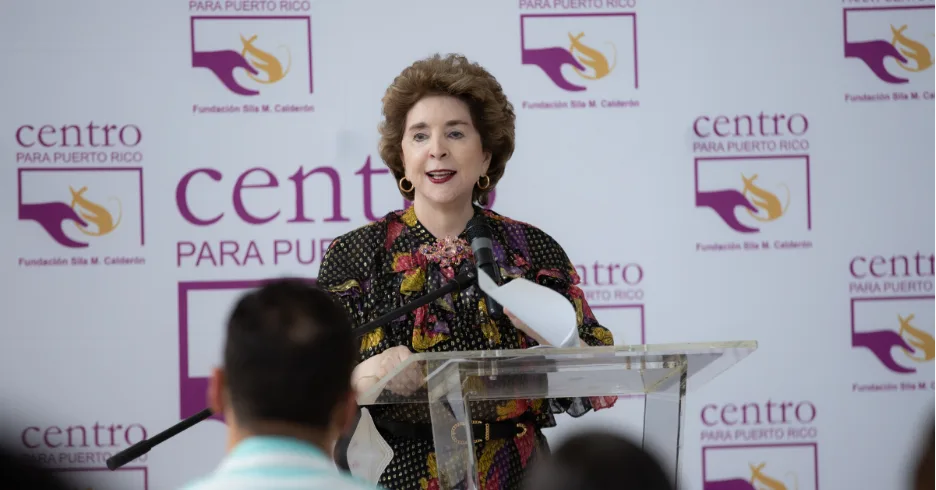
Source: Sila M. Calderón Foundation Centro para Puerto Rico
For Sila, public service didn’t end when she left office. It deepened.
María Elena has followed that same path, serving on multiple boards including United Way and the Calderón Foundation for 11 years.
“I try to instill service in my daughters,” María Elena says. “We bring cakes to nursing homes. It’s about ‘paying it forward’ and teaching gratitude.”
“Ser Feliz A LA BRAVA”: The Philosophy of Fierce Joy
As the conversation draws to a close, Maristella asks about the phrase that has become central to Sila’s life philosophy: “Hay que ser feliz a la brava” (You have to be happy fiercely/determinedly).
“Happiness is not something that happens to you,” Sila explains. “It’s something you decide. You pursue it intentionally. You fight for it. A la brava.”
María Elena echoes this with her own advice for working mothers today: “Practice self-compassion. Don’t aim for perfection. Don’t compare yourself to others. Use selective memory, remember the good, let go of the rest. And yes, be happy a la brava.”
It’s a powerful reframing: happiness as discipline, as choice, as something you claim rather than wait for.
What This Conversation Teaches Us
This episode offers lessons that extend far beyond politics or law:
On work-family integration: Stop at the pharmacy. Bring home comics. Create rituals that say “you matter” even when you’re building something big.
On discipline: A or F, not C. Excellence isn’t optional, but it doesn’t mean perfection. It means showing up with your best.
On building your tribe: You can’t do it alone. Don’t apologize for needing help. Grandmothers, employees, spouses who share the load. That’s not weakness, that’s wisdom.
On leadership: Sensitivity, not ego. Mentorship, not power. Confronting fear, not avoiding it. Doing what’s right, not what’s popular.
On happiness: It’s a decision. A discipline. Something you pursue a la brava—fiercely, determinedly, unapologetically.
Watch the Full Episode
The complete conversation between Maristella Collazo-Soto, Sila M. Calderón, and María Elena González Calderón explores:
The challenge of that first job with a three-year-old at home
Subscribe to the channel to never miss conversations with Puerto Rico’s most inspiring leaders.
About Our Guests
Sila M. Calderón has served Puerto Rico from the highest levels of public administration, having been Mayor of San Juan and the first woman to hold the Governorship of the island. Her career is marked by an unwavering commitment to socioeconomic development, work she continues today as president of the board of directors of Centro para Puerto Rico and the Foundation that bears her name. Her legacy has been recognized internationally with multiple honorary doctorates and distinctions, including the Lifetime Achievement Award presented by President Barack Obama.
María Elena González Calderón holds a solid academic background, having graduated from Princeton University and Georgetown University Law School. She has held positions of high responsibility, including directing the Office of the First Lady and administering the restoration project of the San José Church. Her vocation of service is manifested in her active participation on various social impact boards and her decades of volunteer work, merits for which she was distinguished with the prestigious Churchill G. Carey, Jr. Award.
Frequently Asked Questions
What does “ser feliz a la brava” mean in English?
“Ser feliz a la brava” means “being happy fiercely” or “determinedly happy.” It’s a philosophy from former Governor Sila Calderón that reframes happiness as an active choice and discipline rather than something that happens to you. It means pursuing joy intentionally, fighting for it, and refusing to wait for circumstances to improve before claiming happiness.
How did Sila Calderón balance being governor with being a mother?
Sila created rituals that demonstrated priority even during demanding work periods. She stopped at pharmacies to bring home comics every day so her children “would wait for my arrival with excitement.” She relied on her “tribe”, and built consistent connection points rather than trying to compartmentalize work and family completely.
What is the “A or F, no C for mediocrity” philosophy?
This parenting approach means setting high standards while providing real support. Sila insisted on excellence (“A”) or honest acknowledgment of struggle (“F”) rather than accepting mediocrity (“C”). The goal was developing talent and instilling discipline, her children attended Ivy League schools thanks to portfolios built from young age—but with love and support, not pressure for pressure’s sake.
How do you handle fear in leadership according to Sila Calderón?
“Confront fear head-on,” Sila advises. “Fear is the opposite of love. When you have a clear vision, fear doesn’t exist.” This philosophy led her to make unpopular but necessary decisions as governor. She emphasizes doing what is right rather than what is popular, leading with conviction rather than consensus, and maintaining clarity of purpose.
How did María Elena González Calderón’s upbringing shape her service work?
Growing up with a mother in public service taught María Elena independence and the importance of service. She remembers her mother bringing comics, learning to grocery shop alone, and watching her mother balance high-level work with family presence. Now she serves on boards including United Way and the Calderón Foundation, and teaches her own daughters to “pay it forward” by bringing cakes to nursing homes.
Así las Cosas is a podcast series hosted by Maristella Collazo-Soto, Capital Partner at Ferraiuoli LLC, featuring conversations with Puerto Rican leaders, professionals, and change-makers who are shaping the island’s business, civic, and cultural landscape.
Host: Maristella Collazo-Soto, Capital Partner, Ferraiuoli LLC